
How to Open the Best NRI Bank Account

Are you a non-resident Indian (NRI) looking to open a high-quality bank account in India?
One to help you maintain an active relationship with India to manage any properties, businesses, or other affairs back home? Or to make it easier to send remittances to your family?
Despite over 32 million NRIs or Overseas Citizens of India (OCIs) across the world, there are surprisingly few quality banking options to meet NRI needs. Particularly those that will enable NRIs to open or manage their accounts remotely.
KEY TAKEAWAYS:
- The primary features you should look for in a good NRI bank account
- Not all banks offer NRI accounts, how to find the ones that do
- Additional documentation will be required with remote account opening
- A joint account with residents is a requirement for many NRIs
- Bank representatives can be difficult to contact
Luckily, with the right approach, you can open an excellent NRI bank account for your banking needs to ensure that you live your life in an uninterrupted manner. Read on as we share everything you need to know about how to open the best NRI bank account.
How Can You Open an NRI Bank Account?
To open an NRI bank account you need to know which banks will accept your client profile and offer the services you’re after. Then, you need to meet account opening requirements, submit specific supporting documents, and pass the banks’ due diligence process.
But, before diving in, if this is your first time visiting GlobalBanks, don’t forget to download your FREE Non-Resident Banking Starter Guide. It’s designed to help non-residents open accounts in top banking hubs around the world.
Here’s a look at everything we’ll cover in this article…
Table of Contents:
- Types of Accounts NRIs Can Open
- Factors to Consider with NRI Bank Account Opening
- Challenges You Can Face With NRI Bank Account Opening
- NRI Bank Account Opening… What Do You Need?
What Type of Accounts Can NRIs Open?
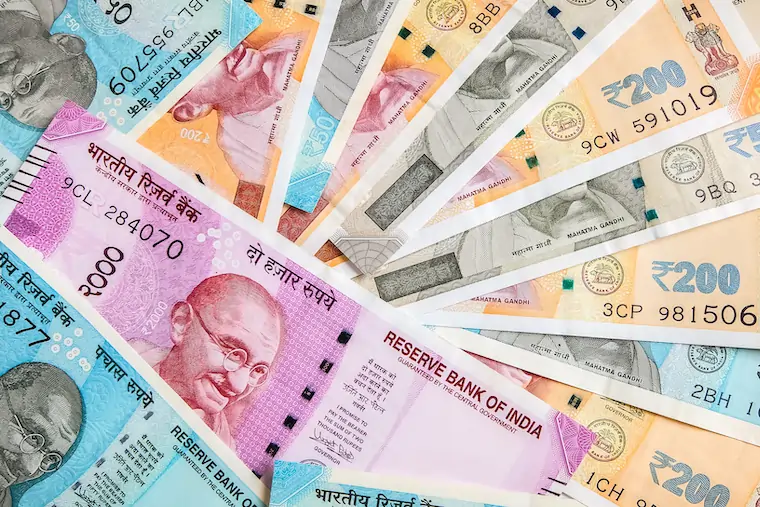
There are three main types of accounts that you can open as an NRI, as mandated by the Reserve Bank of India:
- Non-Resident Ordinary (NRO) Account
- Non-Resident External (NRE) Account
- Foreign Currency Non-Resident (FCNR) Account
The type of account that is best for you will depend on your particular requirements. So be careful when applying for accounts to make sure that you have chosen one that is able to meet your requirements. Read on for what each of these accounts offer.
Non-Resident Ordinary (NRO) Account
Maintained in rupees and meant to be primarily for credits of locally (in India) received funds that are not eligible for freely being transferred overseas. This type of account is best for…receiving local (Indian Rupee) credits that are not eligible for freely being transferred overseas.
Non-Resident External (NRE) Account
Also maintained in rupees, either as savings or Fixed Deposit accounts. However, account balances can be freely remitted overseas. This type of account is best for receiving money from an external source (outside India) that is repatriable freely.
Foreign Currency Non-Resident (FCNR) Account
Maintained in specified foreign currencies, only as fixed deposits. Freely repatriable. This type of account is best for money received from an external source (outside India) that can be held in one of the designated foreign currencies as a time deposit account and can be freely remitted overseas.
An NRI can have all the different types of accounts mentioned above, or just one or any two of them. The type of account is based on the need of the NRI.
Factors to Consider with NRI Bank Account Opening

In this section, we will cover the various factors that you should bear in mind while approaching a bank to make sure that you get the best NRI bank account for your needs.
The main idea here is that a bank should make your life better. It should not cause you headaches or be an obstacle. The following factors should be borne in mind when choosing which bank to open an account with:
Key Factors to Consider Before Opening an NRI Bank Account
- Competitive interest rates
- Ease of account opening, including virtual account opening
- Smooth remittance facilities, in and out
- Preferential exchange conversion rates
- Low minimum balance requirements
- Credit and Debit Card privileges, for India and overseas, and a multi-city checkbook
- Digital banking facility
- Joint account with resident possible
- Add-on services like investment advisory and insurance
- Relationship services
- Overseas network as the point of contact for the account holder
- Safety of the bank
- Services, reputation, and reviews
- Any other
Most banks you research will perhaps not be able to offer everything you need. They will have their areas of weakness and strength. If you are able to prioritize the relevance of each factor for yourself, the task of evaluating and narrowing it down will become easier and faster.
We have created this list of features so that you can easily tick the ones that are important for you. This way, you will have clarity when you are speaking to a banker to open an account.
Here we’ll break down some of the top items on the list and what you should look for in each.
Competitive Interest Rates
Interest rates should be competitive since there will be many occasions when your money will be lying idle in the account.
Account Opening Process
Look for a bank that clearly articulates its account opening requirements. This will help to make the account opening process much smoother. If possible, look for remote account opening, to save you from having to travel in person to open the account.
Remittance Infrastructure
If you plan to make frequent remittances to your friends and family back home, make sure to find a bank with a good remittance and payment infrastructure. This can be seen in low transfer fees, short processing times, and a wide network of countries where you can make remittances to and from.
Preferential Exchange Rates
For much the same reason as above, you are likely to need to convert to and from Indian rupees into other currencies regularly. So look for a bank that has preferential exchange rates for conversion.
Reasonable Balance Requirements
It’s critical that you are aware of the minimum balance requirements before you open an account. When possible, avoid onerous requirements to maintain a high minimum balance. If you’re not able to maintain the required amounts, you will end up paying monthly fees or penalties.
Access to Debit & Credit Cards
For the ease of utilizing the money lying in the account, the bank should provide facilities such as Debit and Credit cards that are linked to the account and can be used in India and overseas. Though their use is rapidly reducing, a multi-city chequebook should also be issued for the account for cases where a cheque needs to be issued.
In-Person Management NOT Required
For NRI accounts it’s very important to find a bank that offers digital banking and that does not require in-person visits for account opening or routine account issues.
Not only will this save a great deal of money on flights to open the account, but it will also ensure that you’re not locked out of your account at any point because you aren’t able to physically visit the bank.
Access for Resident Family Members
A joint account may be a requirement for you if you have close family members, such as parents, living in India, for whom you maintain the account at least partially to support. Hence, it should be possible to either hold the account with a resident or permit a resident the right to withdraw from the account.
Customer Service
As an NRI, you can have complex banking requirements, that may not be possible to serve through a Call Center or a Teller counter. A Service Manager (SM) or Relationship Manager (RM) who you can speak to in times of need is a very good thing to have.
Global Footprint
Whenever possible, it’s a good idea to prefer a bank with an overseas network. This is beneficial not only for opening but for ongoing maintenance.
The reason is simple; if you are based in Los Angeles, for example, you don’t want to have to wait to talk to a representative of the bank in India, who might be operating in an entirely different time zone. For any issues, you want to have the option to be able to call a local representative of the bank in your city or country.
Bank Stability
The safety of the bank and its financial position should always be an important consideration while opening a credit balance account. While an organization’s permanence cannot be guaranteed, it is recommended that NRIs deal only with one of the scheduled commercial banks, which list is published by the Reserve Bank of India. For greater safety, some even recommend opening an account with a public sector bank, as they are finally owned by the government of India.
Additional Services
Add-on services like investment advisory and insurance are offered by some banks. Though they may not constitute an integral part of the requirement, they can be of great benefit to you. You should make the effort to enquire about add-on services.
Reputation & Service Delivery
Of course, the service provided by the bank, its reputation, and reviews on independent sites should round off the considerations for account opening.
Despite NRI accounts being closely regulated by the Central Bank in India, each bank offers these accounts in its own unique way, with different add-ons and features.
Hence, it is important to select the one that would best meet your requirements. For that to happen, understanding your own requirements and expectations is a great starting point before trying to choose an account.
Challenges You Can Face with NRI Bank Account Opening

This section addresses some of the typical hurdles that you may face when you seek to open an account with a bank. Forewarned is forearmed.
You can save yourself a great deal of headaches by taking advantage of the insights we’ve gained from helping NRIs in opening these accounts over the years. As well as the tools and strategies we’ve developed to avoid roadblocks and speed-breakers.
On account of the regulations governing NRI accounts, the wide variety of products and services offered by commercial banks, and each individual’s own preferences and priorities, opening an NRI bank account can be a difficult process.
Here are some of the challenges you are likely to face when looking to open an NRI bank account.
Not All Banks Offer NRI Bank Account Opening
While all scheduled commercial banks in India are permitted to open NRI accounts, not all banks may choose to offer the service or do so at all branches.
This is mainly because the maintenance of NRI accounts requires additional checks that the banks have to perform and they may not have the appropriate staff to do this in all branches. Hence, firstly, you need to figure out the most suitable branch for you to open an NRI account.
An extension of this issue is that since NRI accounts are of multiple types, and some are held in foreign currencies, even some branches that open NRI accounts only do so for rupee-denominated accounts and not for ones held in dollars and euros.
Availability of Bank Representatives
As an NRI, by definition, you live elsewhere, or overseas. You cannot keep contacting the account-holding branch in India for every requirement. Many times, doing so is not possible because of the vast differences in time zones, say between India and the US.
As mentioned above, if you live in the US, you should be able to contact a representative in the US, during regular working hours, to get your query resolved.
It may be a challenge to find a bank that can offer this, but it is well worth the effort.
Ability to Handle Complex Client Profiles
Another common problem that NRIs face is having a relationship manager that is not fully equipped to handle their queries and needs.
NRIs face a number of unique issues, such as double taxation. Many NRIs are required to file returns for taxes in more than one jurisdiction. Navigating through the complex lanes of regulations and government bureaucracy requires skillful handling that many banks are not able to provide.
NRIs may also find limitations in the guidance their banks offer in terms of the differences between the types of accounts and the dos and don’ts for smooth operation.
For instance, it may be possible to credit the receipt of rental from an Indian property to an NRO account but not to an NRE account. The banker needs to be able to guide the account holder at the time of account opening as well as from time to time as regulations evolve.
Remittance and exchange rates are another common issue faced by NRIs, both in terms of preferential conversion rates as well as fees. Many NRIs find that their bankers are not clued in on how to make overseas remittances from their accounts.
As an NRI, it is important that you open an account with a bank that is not only suitable for your personal requirements but is also equipped with trained people and access to tools and technology that will make your banking relationship a pleasant and lasting experience.
NRI Bank Account Opening… What Do You Need?

This is where the rubber meets the road; the actual account opening. This section prepares you to obtain the documentation that banks ask for while opening NRI accounts.
This will, hopefully, obviate the need to make multiple attempts at account opening because one or more required documents are missing, as many NRIs find out to their chagrin.
Most banks have a well-defined process and set of requirements for opening an NRI account. The requirements range around the following requirements:
- Establishing the identity of the account holder
- Establishing the proof of his/her status as a non-resident
- Establishing his/her valid overseas address and other contact information
The next section will provide more information on each of these. You may also need to identify the branch where you can open the account as not all branches might be doing so.
What Do You Need to Open the Best NRI Bank Account?
The main requirements can be broken down into sections:
Basic documents
- Appropriate (depending on the type of account being opened) account opening form signed by all holders.
- Latest passport-size photograph of all holders.
- Copy of PAN (Permanent Account Number) card. In the absence of PAN, a Form 60 declaration is to be submitted.
Proof of identity
For NRIs, a copy of the valid, current passport (both Indian and Foreign passports are OK) is taken as proof of identity.
Proof of non-resident status
- If you are an Indian passport holder, a copy of a valid Employment / Residence / Student / Dependent visa or Work / Residence Permit.
- If you are a foreign passport holder, you must submit a copy of your valid OCI (overseas citizen of Indian origin) registration. In the absence of this, a declaration of status is required. In addition, you will need to provide proof that your parents or grandparents are or were Indian citizens to demonstrate that you are indeed, of Indian origin.
Proof of address
A copy of any one of the following, either for the overseas address or the Indian one:
- Valid Passport
- Driving License
The following are additional options for the Indian address:
- Aadhar Card
- Voter’s ID card issued by the Election Commission of India
- Job Card issued by NREGA duly signed by an officer of the State Government
Additional options for foreign passport holders:
- Documents issued by the Government departments of foreign jurisdictions (Work/Resident Permit, Social Security Card, Green Card, etc.)
- Letter issued by the Foreign Embassy or Mission in India
In some cases, like remote account opening, additional documents may be required, such as:
- Overseas bank account check for the first transaction
- Overseas account paid or canceled cheque leaf
- Copy of pay slip or income tax filed and acknowledged the return
Even though the documents are well defined, banks are known to be finicky in accepting them. Here are some of the things you may need to keep in consideration with your supporting documents:
- Copies need to be legible.
- Signatures need to tally across documents and across time periods.
- Many documents need to be attested by a government-recognized official of a certain rank.
- An English translation, from authorized sources, may need to be obtained.
- If specified documents are not available, certain self-declaration forms can be submitted in lieu.
- If the account is being opened remotely, additional requirements may be applicable, such as submitting a cheque of an overseas bank account or a copy of the pay slip or income tax filed and acknowledged return.
All these factors can play a part in making sure that your documents are accepted for opening your NRI bank account.
Ready to Get Started With NRI Bank Account Opening?
Whether you’re ready to open a bank account in India today or you’re just starting to explore your options, we can help.
GlobalBanks IQ gives you everything you need to start finding and opening accounts.
When you join GlobalBanks IQ, you immediately unlock the entire GlobalBanks Database of international banks. It’s home to 250+ banks in 50+ countries.
And, you get access to our library of premium (members-only) reports. These include proven account opening strategies, country-specific banking options, and lists of banks for specific client types.
Plus, you unlock our account opening checklists, dedicated account opening alerts, and much more.
To get started, click here to see if GlobalBanks IQ is the right choice for you.